How Billing Weekly Loses Your Firm Thousands per Year
Efficient timekeeping is an attorney’s paradise. Firms require that partners and associates hit their minimums to stick around or stay eligible for the bonus pool. That’s hard because while minimums start at 1,700 hours, they go up to 2,300 hours a year. Even the Yale Law School points out how difficult hitting the minimum can be: only 75% of your time working ends up being billable hours, because the rest is consumed by administrative tasks.
Administrative tasks and other nonbillable work eats away at an firm’s billable hours. Every minute you spend attending conferences, commuting, entering your billed hours and searching for old emails can’t count towards your minimum. It’s no wonder that law firms across the country are constantly pressuring their staff to concentrate on efficiency and time at work. In big law 8am-8pm days are not uncommon but typical.
Timekeeping Frequency Leads to Lost Hours
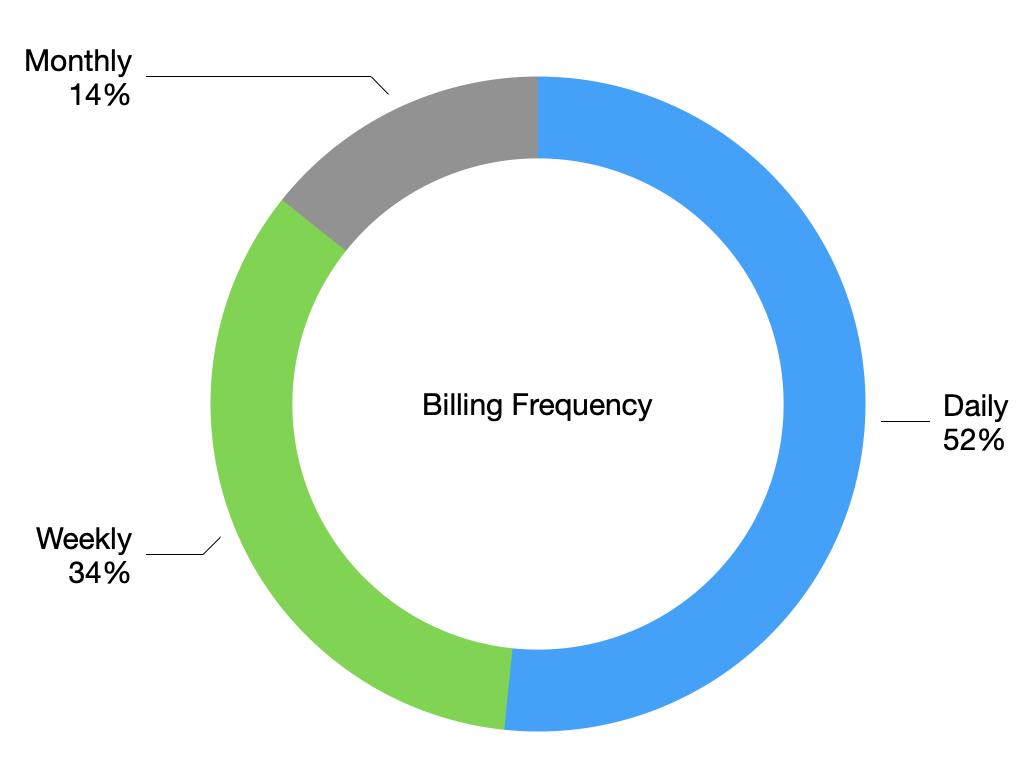
While most firms (47%) require their attorneys to submit billed hours daily, weekly submission (31%) and monthly submission (13%) are surprisingly common despite their downsides. Daily submission is best because your time spend is fresh in the head. Billing at the end of the week or, worse, end of the month, results in underestimation of hours due to uncertainty. Nearly 60% of lawyers admitted to underestimating hours because they couldn’t remember the exact duration.
In fact, the average lawyer underestimated billing by 5.8 hours per month! Attorneys who worked in intellectual property and corporate law underestimated by 7.5 hours per month.
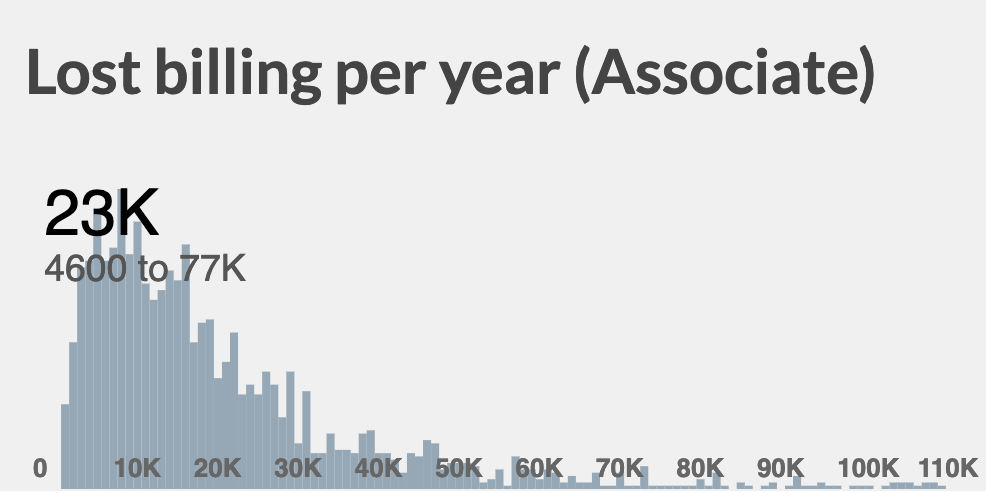
If the average associate at a firm billed for $370/hour and underestimated billing by 5.8 hours per month (the survey average), the firm expects to lose nearly $25k in billed time. For an average firm billing $370 for an associate and $600 for a partner, that’s $23k in billed hours lost per year per associate!
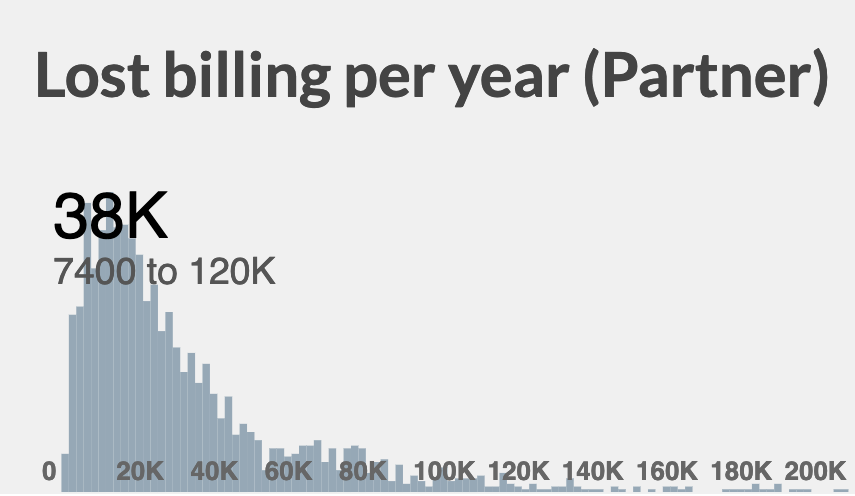
The loss is even more drastic for partners, who are often less tech savvy and have more pressure for their time than associates. If the average partner bills at $600, the firm expects to lose $38,000 per year, and the partner must spend more time in the office to hit their minimum.
Associates are also more likely to underbill (65% underestimate compared to 55% of partners).
Vague Invoices Create Negative Appearances
One of the hallmarks of infrequent billing entry is vague descriptions of work completed, like “negotiated with counterparty” or “responded to emails”. The client’s legal department typically frowns on these descriptions as they indicate inattention to the subject matter.
This also means these line items on the invoice could be first to go if the client’s general counsel complains about the invoice. This only increases the amount of legal work that goes uncollected at large law firms.
Recreate Your Day to Bill
While most attorneys make an effort to bill daily, when urgent matters delay billing, it’s super useful to recreate the previous day to remember what tasks were completed.
Common ways of recreating your day include looking at the calendar for meetings, Zoom calls, phone calls or reminders. Additionally, many lawyers look at their email’s Sent folder to gauge what client correspondence happened that day.
Automatic Billing
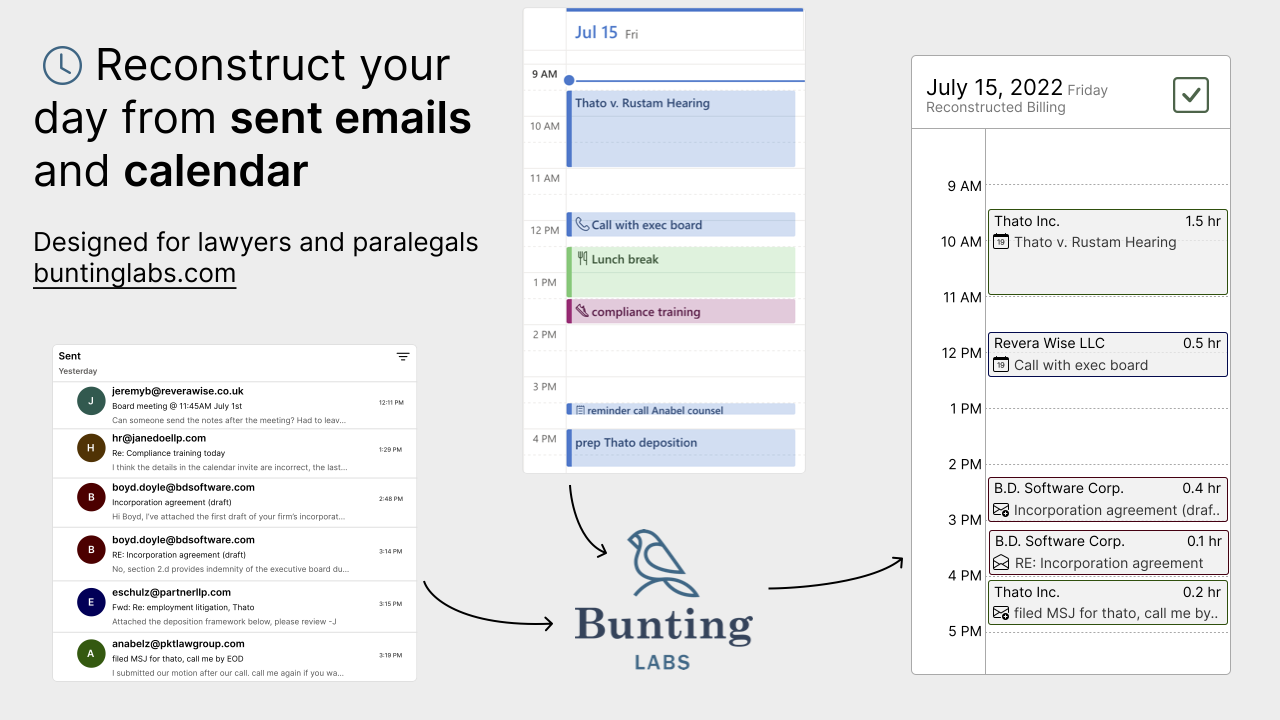
Most lawyers recreate their days manually by opening Microsoft Outlook’s Sent folder and checking their calendar. To help lawyers remember all of their client’s work, we built Bunting Billing, an automated billing tool to remember yesterday’s work.
By pulling in events from your calendar and sent emails from your Microsoft Outlook account, we could help lawyers recoup hours they otherwise lose from forgotten tasks.
Incentives to Bill Frequently
Firms want to push their staff to bill on time, so they’ll often punish lawyers who don’t with a fine, withholding their paycheck, embarrassing emails or even deducting from their paycheck.
These incentives are effective but never return lost billed hours due to underestimated and forgotten work done on behalf of a client.
This is why it’s always important to recreate your previous day by looking through your sent emails and checking your calendar with Bunting Billing
Data
Primary Research randomly sampled lawyers from 480 law firms that had at least 25 attorneys on staff. Their data is online at the Survey of American Lawyers at Major Law Firms: Tracking Billable Hours and Other Work Time which is available online for download. The survey was published in 2014.